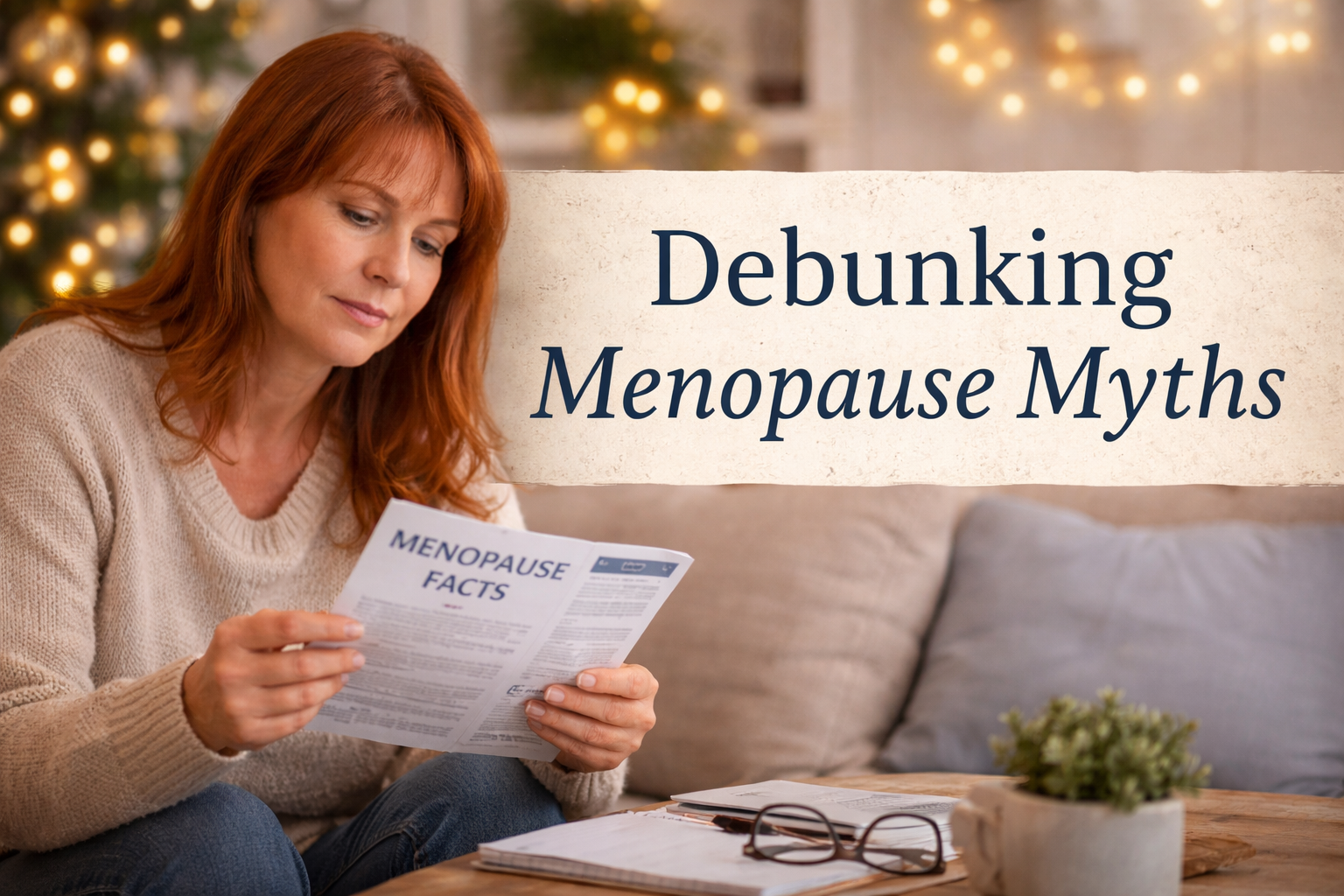
Debunking Menopause Myths
 Debunking Menopause Myths Starts With the Truth
Debunking menopause myths matters because confusion creates fear. Many women enter menopause without clear information. As a result, anxiety often replaces confidence. However, menopause is a natural transition, not a medical failure. When myths fall away, women gain clarity and control.
Menopause marks the end of menstrual cycles and fertility. At the same time, it opens a new phase of physical change. Because every woman is different, experiences vary widely. Understanding this helps remove unnecessary worry.
Myths About Sex and Desire
One of the most common beliefs involves intimacy. Many women hear that menopause ends their sex life. This idea is false. While hormone changes can affect desire, pleasure does not disappear. Communication plays a major role. Talking openly with a partner often improves connection. In addition, medical support can help with dryness or discomfort. Many women report stronger intimacy after menopause once pressure lifts. Because of this, debunking menopause myths around sex allows women to redefine pleasure on their own terms.
Awareness Around Age
Another misconception centers on timing. Many believe menopause happens at a fixed age. In reality, menopause can begin anytime between the forties and early sixties. Genetics, health, and life events all influence timing. Some women experience symptoms earlier than expected. Others notice changes much later. This range is normal. Understanding this reduces panic and comparison. So, debunking myths about age helps women trust their own timeline.
Menopause Myths Related to Treatment
Many women think hormone therapy is the only solution. While hormone replacement therapy can help some women, it is not the only path. Lifestyle changes often make a meaningful  difference. For example, nutrition, sleep, and movement affect symptom severity. Stress management also plays a role. Some women explore alternative approaches with guidance from providers. Because each body responds differently, treatment should feel personalized. Debunking menopause myths about treatment encourages informed decision making. For additional education, you can explore general menopause guidance at the North American Menopause Society website.
Myths Beyond Reproductive Health
Menopause affects more than fertility. Bone density, heart health, and mental health can all change. Mood shifts, brain fog, and sleep disruption are common concerns. However, awareness leads to prevention. Strength training supports bones. Regular movement benefits the heart. Mental health improves with rest and regulation. Because menopause touches many systems, debunking the myths helps women take proactive steps.
Debunking Menopause Myths About Decline
One of the most harmful beliefs frames menopause as loss. This mindset damages confidence. In reality, many women report renewed focus and freedom. With fewer hormonal swings, emotional clarity often improves. Many women reassess priorities and boundaries. Growth continues in new ways. By focusing on care rather than criticism, this stage becomes  empowering.
Debunking menopause myths around decline helps women reclaim agency.
What Comes After Debunking Myths
Once myths fade, clarity remains. Women can approach menopause with knowledge instead of fear. Support systems matter during this transition. If emotions feel intense, tools can help. You can calm Menopause Rage with help from my Free Guide, designed to support emotional regulation during menopause.
You can also join ongoing conversations in the Menopause Forum, HERE where real experiences are shared without judgment.
Debunking menopause myths creates space for confidence. When women understand what is happening, they feel less alone. Knowledge replaces confusion. Support replaces shame. Menopause is not an ending. It is a shift that deserves respect, information, and care.