How Menopause Can Quietly Destabilize a Strong Marriage
How Menopause Can Quietly Destabilize a Strong Marriage
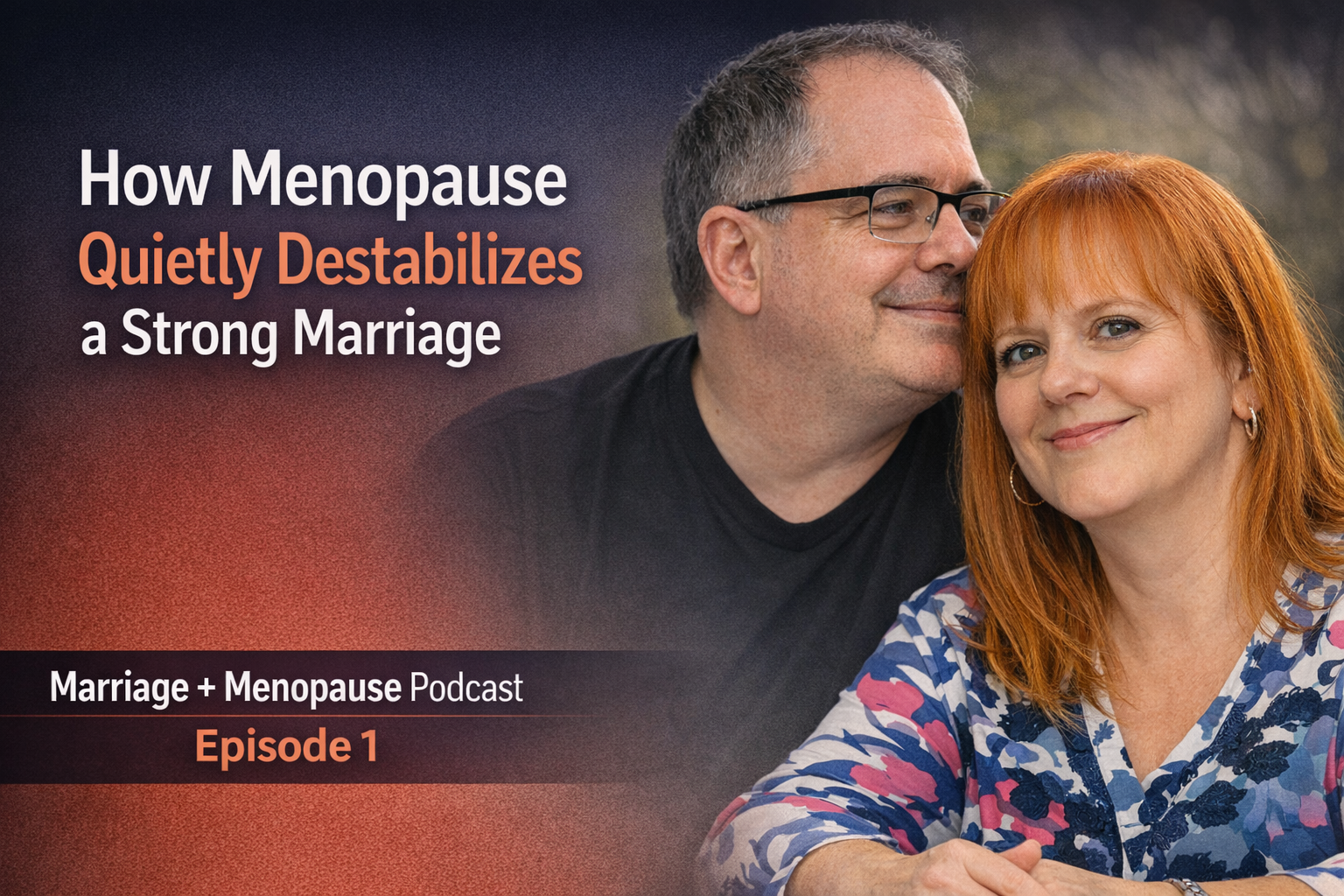
This article is drawn directly from Episode 1 of the Marriage and Menopause Podcast. Follow it HERE.
It is the core conversation. The one that explains how menopause can quietly destabilize even a strong marriage, how hormone decline affects connection, and how silence nearly cost us everything. So, we are sharing what actually happened inside our own home.
“We Weren’t Prepared”
We were not warned. No one explained what hormone decline actually does to a woman’s body, mind, mood, sleep, desire, or sense of self. We were not educated, and as a result, we were not prepared. Menopause did not show up as a hot flash joke. It showed up like a freight train. And because we did not have language for what was happening, we assumed the problem was our marriage.
Why Menopause Is So Dangerous to Relationships
Menopause is one of the most under-discussed medical transitions in a woman’s life, yet its biological impact is significant. Estrogen helps regulate serotonin and dopamine, which influence mood, emotional stability, and motivation. Progesterone interacts with GABA, affecting calm and sleep quality. Testosterone contributes to libido, energy, and confidence. When these hormones decline and fluctuate, the impact is not subtle. Changes can appear in communication, patience, emotional regulation, physical comfort, sexual connection, and overall stress tolerance. Despite the scale of this shift, most couples are never trained or prepared for this level of change.
The Silence Is the Real Threat
Menopause is often reduced to memes about hot flashes. In medical offices, many women are dismissed. Doctors often receive minimal menopause training. Conversations are shallow. Solutions are limited. The result? Couples walk into a major biological transition completely blind. When something feels wrong and no one names hormones, couples assume:
-
The relationship is failing
-
One partner has changed
-
Love is fading
-
Something is fundamentally broken
We did not say, “This feels bad. It must be hormones.” We blamed ourselves.
What Hormone Decline Looked Like in Real Life
In 2023, everything intensified. There was:
-
Anger
-
Emotional numbness
-
Overwhelm
-
Withdrawal
-
Disconnection
It felt real. Rational. Final. At one point, the house was listed for sale. Not because divorce was the goal, but because escape felt necessary. The feelings were overwhelming enough to seem like truth. From the outside, it looked like stress, yet from the inside, it felt like some kind of emotional collapse. We learned that it was hormone decline.
Why Menopause Is So Insidious
Perimenopause does not flip like a switch. It creeps in slowly. Over years. Sometimes over a decade. There is no clear moment where you can say, “This is where it started.” It is gradual enough to confuse you. Powerful enough to destabilize you.
The Turning Point: Therapy and Hormone Replacement
Therapy was the first structural decision. Hormone replacement therapy began in mid-2024. Treatment included:
-
Estrogen
-
Testosterone
-
Progesterone for sleep
Within days, mental fog began lifting. Connection returned. Desire returned. Personality clarity returned. Not a new person. The original person. If answers had not been pursued, a good marriage could have ended for biological reasons neither of us understood. That is how powerful hormone decline can be.
A Message to Husbands
If menopause hit your marriage hard, it does not mean you are weak. Nobody trained you for perimenopause! No one handed you a manual, not in school, not from doctors, and not from friends. You walked into a major biological transition without preparation. At the same time, your own testosterone may be declining, which can show up as irritability, low energy, brain fog, or lower libido. When two people are running on empty, normal stress can quickly turn into crisis-level emotion. Before assuming rejection or disrespect, consider the possibility of overload. Hormone decline often brings sleep disruption, anxiety, lower stress tolerance, mood instability, and physical discomfort. If that overload is misinterpreted as a personal attack, conflict escalates fast. This season is not about debate, judgment, or winning. It is about steadiness.
Three Powerful Questions That Lower Conflict
Instead of reacting, ask:
-
“Do you want comfort or solutions?”
-
“Do you want space or closeness?”
-
“What would make today easier for you?”
And when she describes symptoms, say:
“I believe you.”
Belief matters more than fixing.
A 7 Day Reset for Couples
If perimenopause may be affecting your relationship, begin with a simple seven-day reset. On day one, take over one task for the entire week so at least one area of the household feels lighter. Day two, set a boundary of no heavy conversations after 8 pm in order to protect sleep, since sleep stability changes everything. Then on day three, ask a powerful clarifying question: “Do you want comfort or solutions?” Later, on day four, create a shared pause word that either of you can use to stop escalation before a blowup. On day five, spend ten minutes in non-sexual closeness with no agenda attached. Next, on day six, offer one specific appreciation that shows you are paying attention. Finally, on day seven, hold a fifteen-minute check-in and ask what was hardest during the week and what helped the most. Structure lowers the emotional temperature and creates safety during a fluctuating season.
Track the Data
Menopause is measurable.
Track:
-
Sleep
-
Mood
-
Libido
-
Stress
-
Lab work
Hormones fluctuate. Data removes guesswork.
Stop assuming the issue is your marriage before measuring what is happening biologically.
We Deserve Better
We got through this because we pushed for answers, because we stayed when it was uncomfortable, and because we chose to repair instead of retreat. Many couples do not. Menopause is not a punchline; it is a physiological transition that can destabilize a marriage if it remains unnamed and misunderstood. However, couples measure it, understand it, and intentionally addressed the changes, couples can reconnect stronger than before. Menopause is measurable, couples deserve preparation, and we deserve better.