Menopause Glow: Beauty Tips for Radiant Skin, Hair, and Confidence
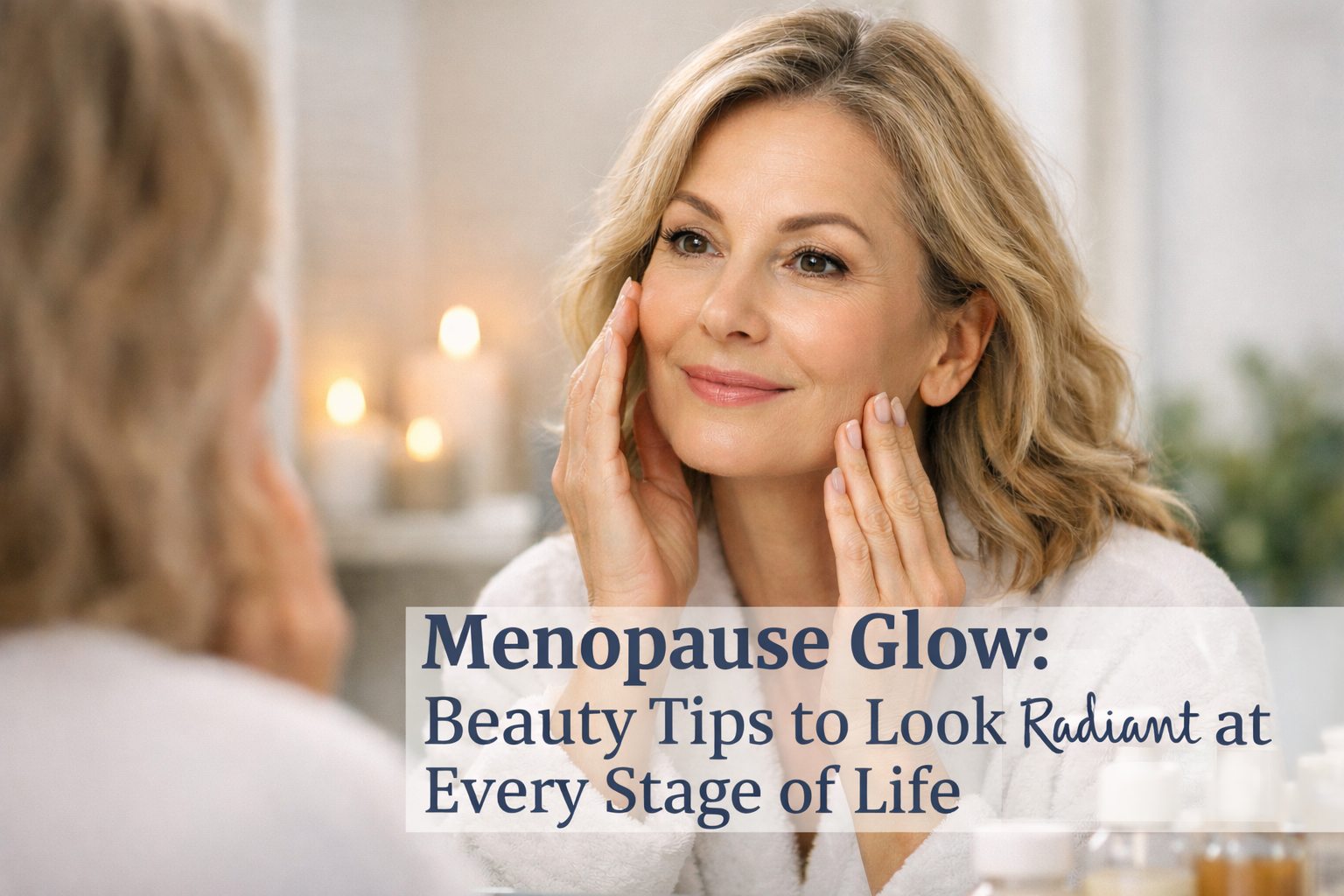
Menopause Glow: Beauty Tips to Look Radiant at Every Stage of Life
Menopause is a natural biological transition that marks the end of a woman’s reproductive years. Along with it comes a wide range of physical, emotional, and psychological changes. One of the most noticeable shifts is the decline in estrogen, which plays a critical role in skin hydration, collagen production, and hair density.
Lower estrogen levels can contribute to dry skin, thinning hair, and changes in texture and tone. These shifts can feel frustrating, but menopause does not signal the end of beauty or confidence. It can be a powerful reset. With the right strategies, menopause can be a time to refine your routine and support your body in new, effective ways.
Below are practical, evidence-informed beauty tips to help support what many women call the “menopause glow.”
Prioritize Skincare That Supports Estrogen-Shifting Skin
As estrogen levels change, skin often becomes drier, thinner, and more sensitive. This can make fine lines, wrinkles, and uneven tone more visible.
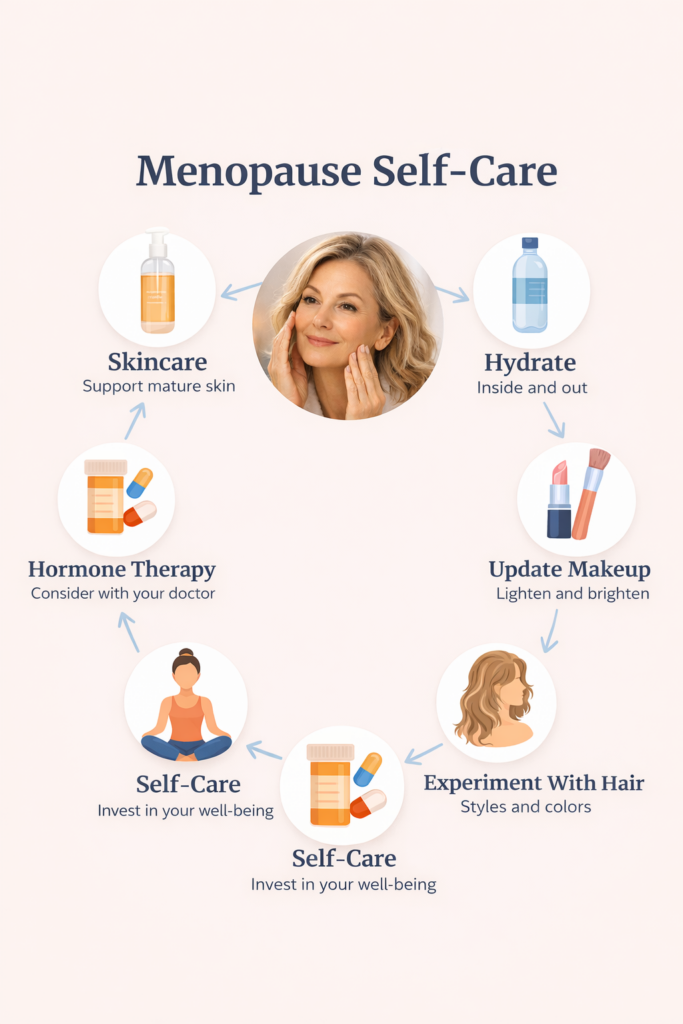
Many women use menopause beauty hacks, but I think skin care is crucial. A consistent skincare routine is essential. Focus on gentle cleansing, barrier-supportive moisturizing, and targeted treatments. Products formulated for mature skin tend to be richer and more supportive.
Ingredients commonly recommended for menopausal skin include retinol to support cell turnover, hyaluronic acid to attract and retain moisture, and vitamin C to support brightness and collagen integrity. Consistency matters more than product quantity.
 Hydrate Inside and Out for Skin Resilience
Hydration plays a major role in skin appearance during menopause. Internal hydration supports circulation and cellular function, while topical hydration helps reduce dryness and tightness.
Drinking adequate water throughout the day supports overall skin health. Externally, hydrating serums, facial mists, and moisturizers help reinforce the skin barrier and improve texture.
Skin that is well hydrated tends to look smoother, brighter, and more resilient, even as hormone levels shift.
Update Your Makeup Routine for Menopausal Skin
Makeup needs often change during menopause. Products that once worked well may now feel heavy, cakey, or drying.
Lightweight, hydrating formulas are typically better tolerated. Cream-based products can enhance glow without settling into fine lines. Illuminating foundations, tinted moisturizers, and subtle highlighters can help reflect light and create a healthier-looking complexion.
The goal is enhancement rather than coverage. Makeup should work with your skin, not against it.
Experiment With Hair Changes That Support Confidence
Hair changes are common during menopause, including thinning, dryness, and texture shifts. Adjusting your hairstyle or color can make a noticeable difference in how you feel and how your hair behaves.
A skilled stylist can recommend cuts that add volume or reduce stress on thinning areas. Strategic highlights or softer color transitions can also create the appearance of fullness and movement.
Hair is deeply tied to identity and confidence. Small changes can have a significant emotional impact.
Invest in Self-Care as a Beauty Strategy
Beauty during menopause is not only about products. It is also about recovery, regulation, and stress management.
Practices such as yoga, meditation, walking, or quiet time can help regulate stress hormones that directly affect skin, hair, and sleep. Prioritizing sleep supports skin repair and hormonal balance. Regular movement improves circulation, which benefits both skin tone and energy levels.
Self-care is not indulgent. It is foundational.
Consider Hormone Therapy With Medical Guidance
For some women, hormone therapy may help alleviate common menopause symptoms such as hot flashes, night sweats, and mood changes. It may also support skin elasticity and hair quality by improving estrogen availability and collagen production.
Hormone therapy is a medical decision and should always be discussed with a qualified healthcare provider. Individual history, risk factors, and goals matter.
When appropriate, hormone support can positively influence both quality of life and physical appearance.
Menopause and Beauty: A New Perspective
Menopause does not have to be defined by fear, loss, or decline. With informed choices and supportive self-care routines, many women find this stage offers clarity, confidence, and renewed self-connection.
Supporting your skin, hair, and overall well-being through menopause is not about chasing youth. It is about working with your biology and honoring what your body needs now.
The menopause glow is not a myth. It is the result of intention, care, and self-respect.