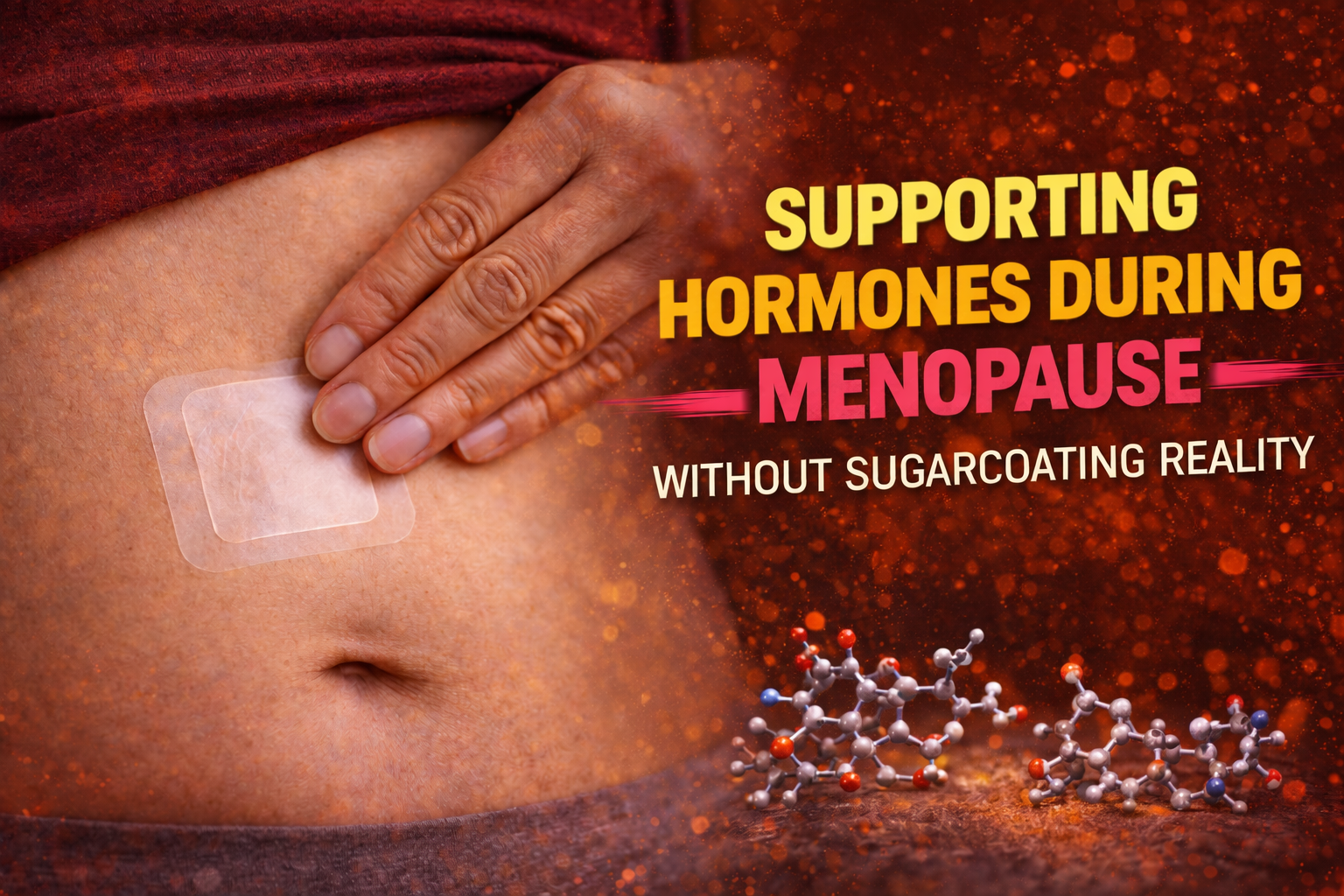
Supporting Hormones During Menopause Without Sugarcoating Reality
Supporting hormones during menopause is not about chasing some mythical state of balance. Hormones are not misbehaving. They are changing. What women are sold is the idea that if they eat well, breathe deeply, and stay positive, everything will smooth out. That story collapses fast once symptoms hit hard. Menopause is not a mindset problem. It is a hormonal shift that deserves clear information, real options, and respect.
Let’s Stop Pretending Hormones Just Need Calming
Hormones do not gently drift into retirement. Estrogen drops. Progesterone disappears earlier than most women expect. Testosterone declines quietly but powerfully. These changes affect sleep, temperature control, mood, libido, joints, skin, and cognition. Ignoring this reality does not make it easier. Supporting hormones during menopause starts with understanding what each hormone actually does and what happens when levels change.
Estrogen Has a Job and Losing It Shows
Estrogen supports temperature regulation, bone density, brain function, vaginal tissue, and cardiovascular health. When estrogen declines, hot flashes and night sweats appear. Sleep fractures. Joints ache. Brain fog becomes real. Supporting estrogen does not automatically mean supplements or soy foods. It means knowing whether hormone therapy is appropriate and understanding delivery options like patches, gels, or oral forms. For many women, estrogen support through HRT is not optional. It is foundational.
Progesterone Is Not Optional Calm
Progesterone is often described as the calming hormone for a reason. It supports sleep, anxiety regulation, and nervous system steadiness. Perimenopause wipes out progesterone  years before estrogen fully drops. That timing explains why sleep and anxiety often unravel early. Supporting progesterone can improve sleep quality and emotional steadiness. Many women notice relief within weeks when progesterone is addressed correctly. Ignoring progesterone is one of the most common clinical blind spots in menopause care.
Testosterone Matters More Than You Were Told
Testosterone affects libido, motivation, muscle mass, and confidence. Women have testosterone. Losing it shows. Low testosterone can look like apathy, loss of sex drive, weaker workouts, and a flat sense of self. No amount of yoga fixes that. Supporting hormones during menopause includes acknowledging testosterone without embarrassment. For some women, carefully dosed testosterone support restores vitality and strength. This is not about turning women into something else. It is about supporting what was already there.
HRT Is A Useful Tool for Many
Hormone therapy is a medical tool. For many women, HRT reduces hot flashes, protects bones, supports sleep, and improves quality of life. Risks exist. Benefits exist. The conversation deserves nuance, not fear based headlines. Resources like the North American Menopause Society provide evidence based guidance that cuts through outdated warnings. Supporting hormones during menopause sometimes means choosing medical support and standing by that decision.
Lifestyle Still Matters but It Is Not the Cure
Nutrition, movement, sleep, and stress management support hormone function. They do not replace hormones that are no longer produced. Protein supports muscle and metabolism. Strength training protects bones. Sleep protects cortisol rhythms. These tools work best alongside hormone support, not as a substitute for it.
Track What Your Body Is Doing
Patterns matter. Symptoms tell a story over time. Using tools like the Menopause Symptom Tracker helps identify how sleep, mood, temperature, and energy shift together. That data supports better conversations with providers and better decisions. Supporting hormones during menopause gets easier when guesswork is removed.
Supporting hormones during menopause is about truth, not platitudes. Estrogen, progesterone, and testosterone all matter. HRT is a valid option for many women. Discuss hormone replacement therapy with your doctor. Women deserve information that respects their intelligence and experience. You are not imagining symptoms or overreacting. Biology is taking over and deserves real support.